
A practical set of tinnitus-focused audio tools built to help the sound feel less urgent.
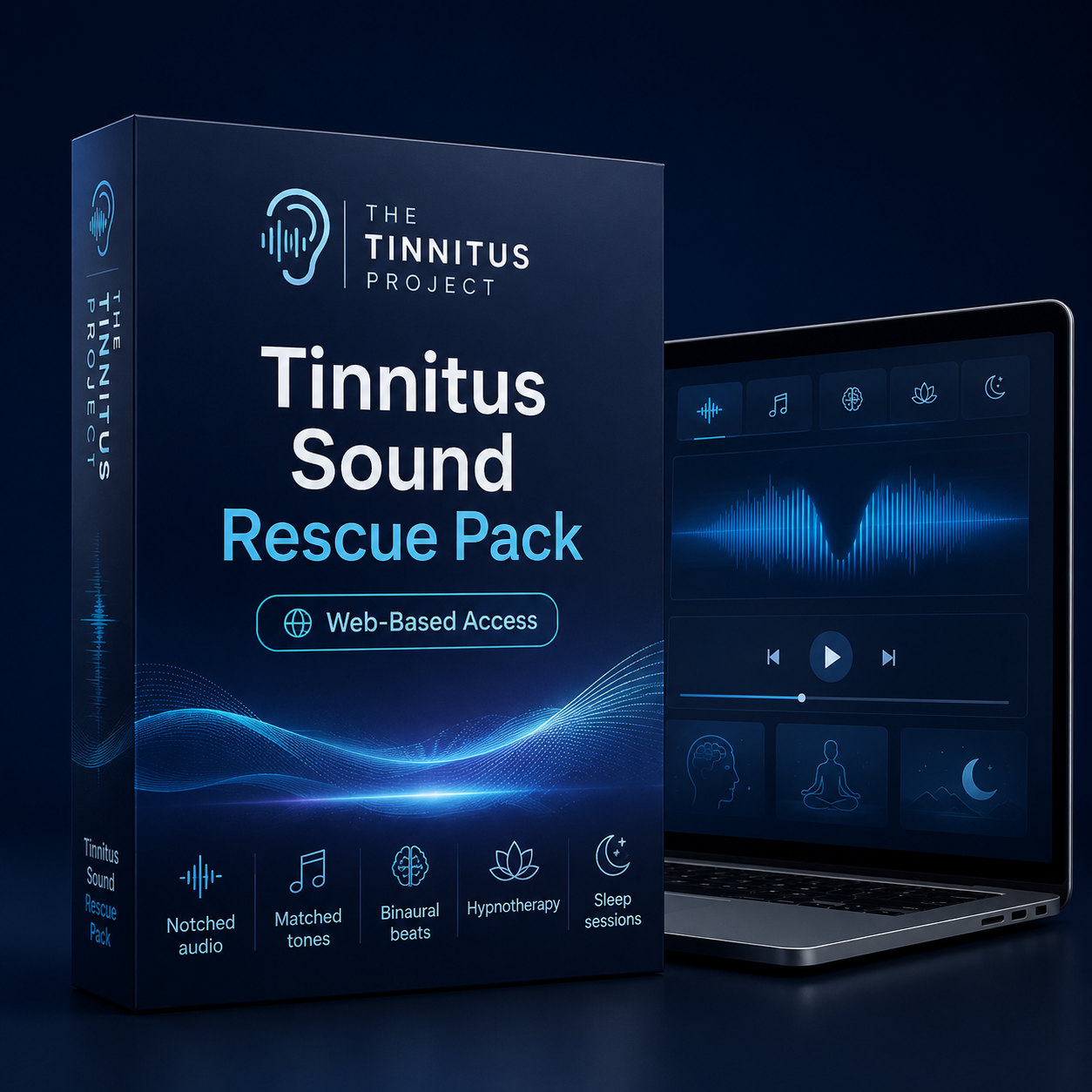
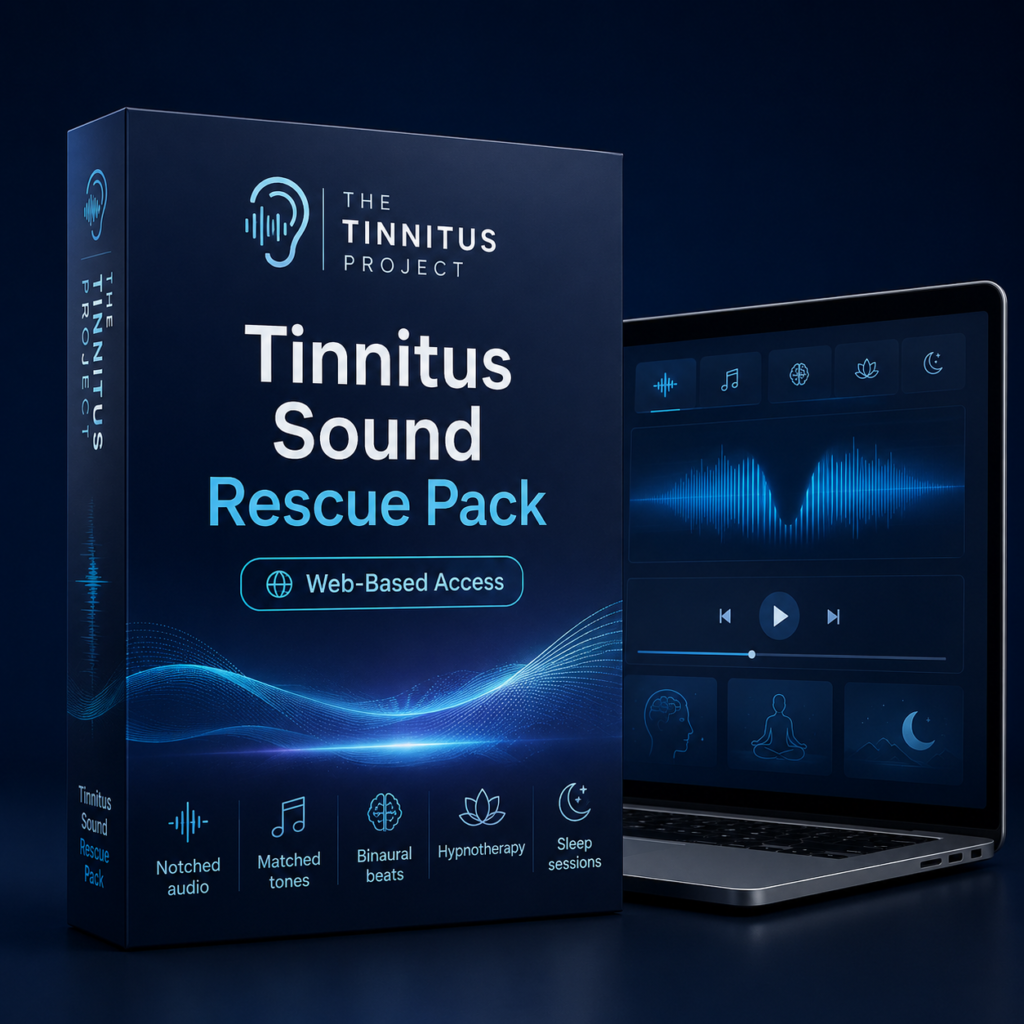
This pack combines:
- personalised sound therapy
- notched audio
- matched tones
- calming binaural beats
- tinnitus-focused hypnotherapy
- and sleep support sessions.
No cure claims. No miracle promises. Just a grounded audio toolkit for people who want something practical to use when tinnitus feels loud, intrusive, or difficult to ignore.
What’s included:
Personalised notched audio sessions
Designed around your matched tinnitus tone to gently reduce the prominence of the sound.
How does audio notching work?
Audio notching is a sound therapy approach where a narrow band of sound is gently reduced around the pitch that most closely matches your tinnitus.
Instead of trying to cover tinnitus with louder noise, notched audio removes or softens the frequency area linked to your tinnitus tone. The idea is to give your auditory system a different kind of listening experience — one that may help the tinnitus sound feel less dominant or urgent over time.
It is not a cure, and it does not work the same way for everyone. But many people find it an interesting, non-invasive way to experiment with how their brain responds to sound.
For best results, notched sessions depend on finding a reasonably close match to your tinnitus pitch first.
*Coming soon play your own music through The Tinnitus Project notch filter.
Matched tone sessions
Audio built around the tone your tinnitus seems to respond to, so you can experiment with masking, blending, and desensitisation.
How does sound matching work?
Sound matching is the process of finding the tone, pitch, or sound texture that most closely resembles your tinnitus.
You listen to different tones and adjust the pitch until it feels close to the sound you hear in your ear or head. Some people hear a clear high-pitched whistle. Others hear buzzing, hissing, pulsing, static, or multiple tones. The goal is not perfection — it is to get close enough to create a useful starting point.
Once your tinnitus sound has been matched, that information can be used to create more personal audio sessions, such as matched-tone listening, masking, blending, or notched sound therapy.
Sound matching also helps you understand your tinnitus better. Instead of it feeling vague and uncontrollable, you start to identify its shape, pitch, and behaviour — which can make it feel less mysterious and easier to work with.
Binaural beat calming sessions
Gentle brainwave-style sessions designed to support relaxation, focus, and nervous-system downshifting.
How Can Binaural Beats Help?
Binaural beats are not included as a tinnitus “cure.” They are included because tinnitus often becomes harder to live with when your nervous system is tense, tired, or on high alert.
By using gentle rhythmic audio through headphones, binaural beat sessions may help support relaxation, focus, or sleep. For some people, that calmer state can make tinnitus feel less urgent and easier to leave in the background.
In this pack, binaural beats are used as a support layer — alongside notched audio, matched tones, and guided calming — to help create a more settled listening experience.
Tinnitus hypnotherapy sessions
Guided calming sessions to help reduce checking, alarm, frustration, and emotional charge around the sound.
How Can Hypnotherapy Help?
Hypnotherapy is included because tinnitus is not only a sound problem — it can also become an attention, stress, and alarm problem.
When tinnitus feels threatening, the brain can start checking it constantly: Is it louder? Has it changed? Will it stop me sleeping? That checking can make the sound feel more important, more intrusive, and harder to ignore.
Tinnitus-focused hypnotherapy uses calm, guided suggestion to help your mind and body respond differently. The aim is not to pretend the sound is not there, but to reduce the urgency around it — less scanning, less frustration, less emotional charge, and more ability to let the sound sit in the background.
It is not a cure, and it does not remove the underlying cause of tinnitus. But for some people, guided calming and suggestion can make tinnitus feel less dominant and easier to live alongside.
Sleep bonus sessions
Extra bedtime-friendly audio sessions for quiet nights when tinnitus feels harder to ignore.
Why Is Sleep Support Included?
Sleep support is included because tinnitus is often most noticeable at night.
During the day, there is usually more background sound, movement, conversation, and distraction. At bedtime, the room gets quiet, the body slows down, and tinnitus can suddenly feel much louder — not always because it has changed, but because there is less competing for your attention.
The goal of the sleep sessions is not necessarily to “calm tinnitus directly.” The goal is to support sleep.
That means giving your brain something gentle to settle into, reducing the shock of silence, and creating a more predictable bedtime sound environment. If sleep becomes easier, tinnitus may feel less threatening simply because you are not lying there fighting it in the dark.
These sessions are designed to support a calmer night-time routine, especially when silence makes tinnitus harder to ignore.
What’s included with every paid option:
✅ Personalised Tinnitus Sound Rescue Pack
✅ Notched audio based around your matched tinnitus tone
✅ Matched-tone sessions for masking, blending, and exploration
✅ Calming binaural beat sessions
✅ Tinnitus-focused hypnotherapy audio
✅ Sleep support for deep restful nights
✅ Adjustable session length and voice where available
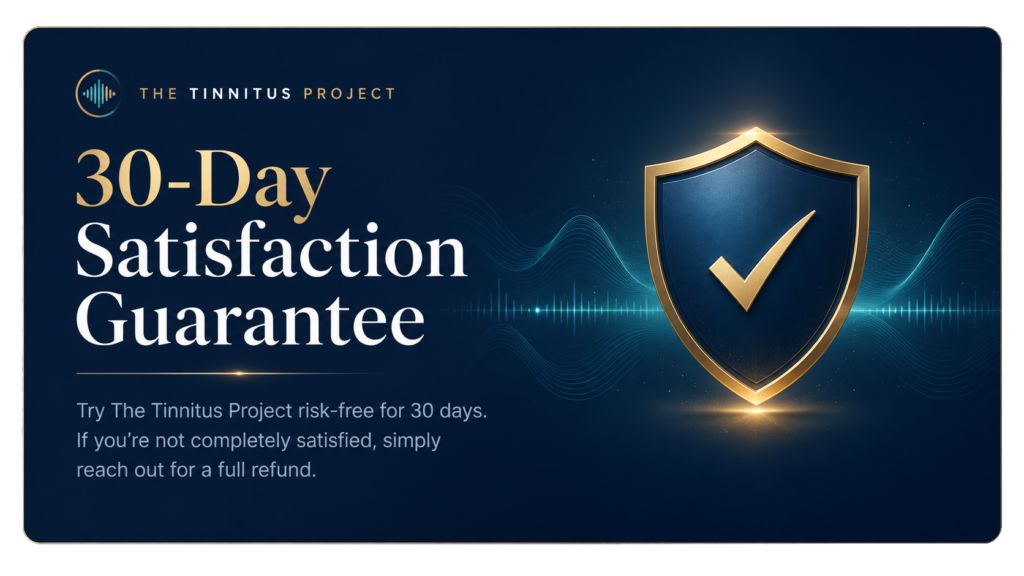
✅ No-pressure refund guarantee
Choose the option that feels right for you.
1 month access
£9.97
Best Value1 Year Access
£97 £47
3 Months access
£27
Frequently asked questions
Is this a cure for tinnitus?
No. The Tinnitus Sound Rescue Pack is not a cure and does not claim to remove tinnitus. It is a self-help audio toolkit designed to help reduce distress, support calm, and make tinnitus feel easier to live alongside.
How does the personalised part work?
You use the sound matching tool to find the tone or sound area that seems closest to your tinnitus. That information can then be used to shape personalised listening sessions, including notched audio, matched-tone support, masking, and calming background sessions.
What if I hear tinnitus at more than one frequency?
Many people hear more than one tinnitus sound, or notice that their tinnitus changes from day to day. You can create new session links for different matched tones or frequency ranges whenever needed.
For best results, start gently and work with one main frequency range at a time. This makes it easier to notice how you respond, instead of changing too many things at once.
What if I do not match my tinnitus perfectly?
Perfect matching is not required. Tinnitus can change from day to day, and many people hear more than one sound. The goal is to find a useful starting point, not a laboratory-perfect measurement. You can adjust and refine your matched tone over time.
Will this work for everyone?
No single tinnitus approach works for everyone. Some people respond well to sound-based support, while others need different help. This pack is designed as a practical, low-pressure way to experiment with sound, calm, sleep support, and habituation-style listening.
What kind of tinnitus is this for?
It may be useful for people who experience ringing, buzzing, hissing, whistling, static-like sounds, or high-pitched tones. It is not intended to diagnose the cause of tinnitus or replace medical advice.
Can I use this if my tinnitus is severe?
You can use gentle sound support alongside appropriate care, but if your tinnitus is sudden, severe, one-sided, linked with hearing loss, dizziness, pain, or causing significant distress, you should speak with a qualified healthcare professional.
Do I need headphones?
Headphones are recommended for tone matching, notched audio, matched-tone sessions, and binaural beat sessions. Some background and sleep sessions may also work through speakers, especially if your goal is simply to reduce the impact of silence.
How loud should I play the sessions?
Keep the volume comfortable and safe. The sessions should not be painfully loud or stressful to listen to. For most people, the goal is gentle support, not overpowering the tinnitus.
Can I use this while sleeping?
Yes, the pack includes sleep-focused sessions designed for bedtime use. Use a comfortable volume and choose a setup that feels safe and practical for you, such as speakers, sleep headphones, or a pillow speaker.
What is notched audio?
Notched audio gently reduces a narrow frequency area around your matched tinnitus tone. Instead of covering the tinnitus with louder sound, the session creates a shaped listening experience around the tone you matched.
What are matched-tone sessions?
Matched-tone sessions use tones related to your tinnitus match. These can be used for masking, blending, exploration, and helping the sound feel less mysterious or less threatening.
Why include calming and hypnotherapy sessions?
Tinnitus often becomes harder to cope with when the nervous system is tense, tired, or on alert. Calming and hypnotherapy-style sessions are included to help reduce checking, frustration, and emotional charge around the sound.
How quickly will I notice a difference?
Some people may feel calmer after a single session. Others may need repeated use before they know whether it helps. This is best treated as a practical support tool rather than a one-time fix.
What happens after I buy?
You will get access to the Sound Rescue Pack and the tools needed to use your matched tones with personalised listening sessions. The exact access period depends on the option you choose.
Is there a refund guarantee?
Yes. The pack includes a no-pressure refund guarantee. If it does not feel useful for you, contact support and we will help.