


If tinnitus makes you feel anxious, panicked, or trapped in your own head, you are not weak and you are not imagining it.
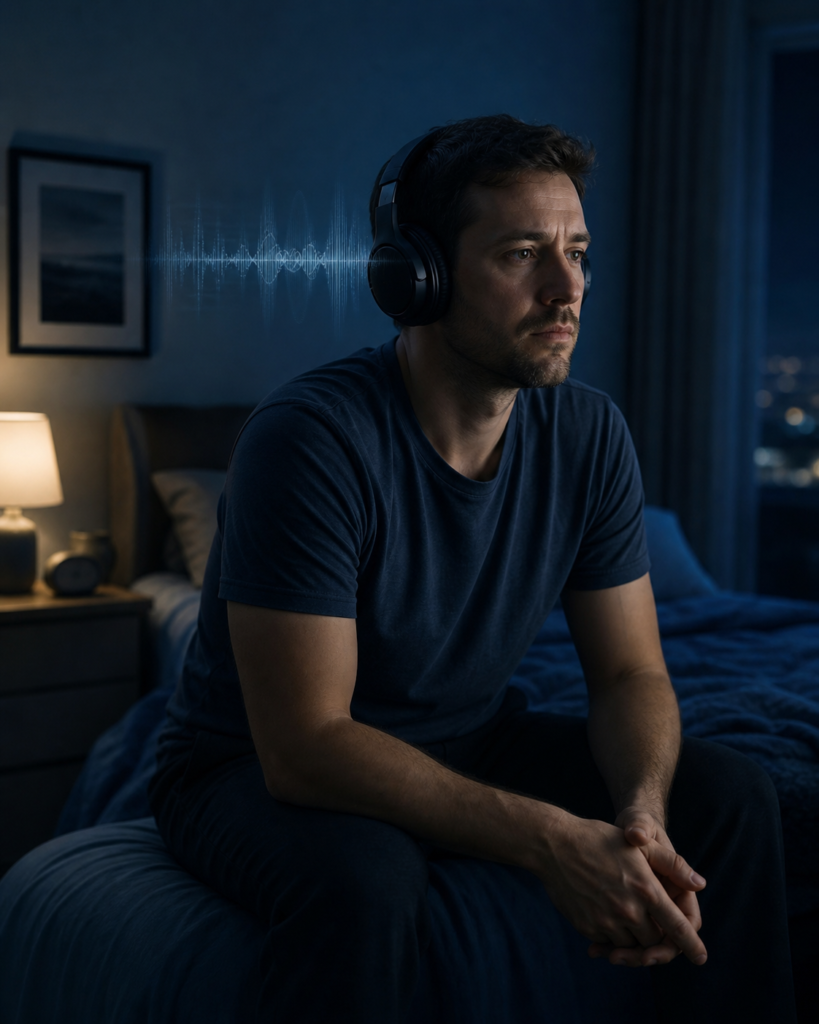
For many people, the hardest part of tinnitus is not only the sound itself. It is the fear response that comes with it.
A ringing, buzzing, hissing, or high-pitched tone can trigger thoughts like:
- What if this never stops?
- What if I can’t sleep?
- What if I can’t cope?
- What if this gets worse?
Those thoughts can quickly turn tinnitus from an annoying sound into something that feels threatening.
The good news is that this fear loop can be calmed. The aim is not to force tinnitus away. The aim is to help your nervous system feel safer, so the sound becomes less dominant.
Why tinnitus can trigger anxiety
Tinnitus is a sound your brain notices internally. When your brain decides that sound might be important or threatening, it can keep checking it.
That checking creates a loop:
Tinnitus → fear → attention → louder perception → more fearThe more worried you become, the more your brain monitors the sound.
The more your brain monitors the sound, the harder it is to ignore.
This is why tinnitus can feel louder during stress, silence, tiredness, or panic. It is not always because the sound itself has changed. Sometimes your nervous system is simply more alert.
The NHS advises relaxation, better sleep habits, stress reduction, and support as useful self-help steps for tinnitus. Tinnitus UK also notes that worry is common when tinnitus first appears, and that relaxation may reduce stress and make tinnitus less noticeable.
Why panic makes tinnitus feel worse
Panic puts the body into threat mode.
Your breathing changes.
Your muscles tense.
Your attention narrows.
Your brain starts scanning for danger.
If tinnitus is already the thing you fear, panic can make your brain lock onto it even more.
This does not mean tinnitus is dangerous. It means your body is reacting as if it needs to protect you.
That distinction matters.
You are not trying to “win a fight” against tinnitus.
You are trying to signal safety to your brain.
What to do in the moment
1. Stop checking the sound for a few minutes
This sounds simple, but it matters.
When tinnitus feels scary, the instinct is to keep checking:
- Is it louder?
- Has it changed?
- Is it still there?
- Can I escape it?
That checking keeps the alarm loop alive.
For the next few minutes, do not try to measure the tinnitus. Let it be present in the background while you focus on calming the body.
You are not pretending it is gone. You are teaching your brain that it does not need emergency attention.
2. Use slower breathing
Try this for one minute:
Breathe in gently through the nose for 4 seconds.
Breathe out slowly for 6 seconds.
Repeat.
Do not force deep breaths. Keep it easy.
The long exhale is the important part. It tells the body that you are not in immediate danger.
Simple breathing and relaxation exercises are commonly recommended as part of tinnitus self-help and stress reduction.
3. Add gentle background sound
Silence can make tinnitus feel more intense.
A soft background sound can reduce the contrast between your tinnitus and the room around you.
You could try:
- rain sounds
- soft noise
- a fan
- gentle ambient audio
- low-volume masking sound
The goal is not to blast tinnitus away. The goal is to make it feel less dominant.
Sound therapy may help by masking tinnitus, distracting from it, or helping the brain grow more used to it over time. The American Tinnitus Association describes sound therapy as using pleasant or calming sounds to reduce the presence of tinnitus and support focus.
4. Name the loop
When panic rises, try saying:
This is a tinnitus fear loop.
My body is reacting to the sound.
I do not need to solve it all right now.
I only need to calm the next few minutes.
This helps separate the sound from the fear story around the sound.
That matters because the panic often comes from the meaning your brain gives tinnitus, not only from the sound itself.
5. Do something physical and boring
Panic wants your full attention.
Give your brain something else to process:
- place both feet on the floor
- press your hands gently together
- notice five things you can see
- unclench your jaw
- relax your shoulders
- sip water slowly
This is not magic. It is interruption.
You are giving your nervous system a different signal.
Try this first
Not ready for a consultation? Try this first.
Use the Tinnitus Project tool to experiment with sound and reduce how dominant your tinnitus feels.
You can also try a short calming sound session if anxiety is the main problem right now.
When to get more support
If tinnitus is causing regular panic, sleep loss, or distress, it is worth speaking to a qualified professional.

This could include:
- your GP
- an audiologist
- an ENT specialist
- a tinnitus clinic
- a therapist familiar with tinnitus distress
There may not be a simple instant fix, but there are established ways to reduce tinnitus distress and improve coping. NIDCD notes that while there is currently no cure for tinnitus, common approaches include sound therapy devices, behavioural therapies, and other support methods to reduce symptoms. CBT is also widely used for tinnitus distress, anxiety, insomnia, and related difficulties.
You do not have to wait until you are desperate to ask for help.
Final thought
Tinnitus anxiety can feel frightening because it creates a loop:
sound → fear → attention → stronger perception → more fearBut loops can be interrupted.
Start small.
Do not try to fix your whole future tonight.
Calm the next minute.
Then the next one.
Then the next one.
That is enough to begin.
FAQ
Why does tinnitus cause anxiety?
Tinnitus can cause anxiety because the brain may interpret the sound as important or threatening. This can create a loop where fear increases attention, and attention makes the tinnitus feel more dominant.
Can panic make tinnitus seem louder?
Yes. Panic can make tinnitus feel louder because the body becomes more alert and the brain starts scanning for danger. This can increase awareness of the tinnitus, even if the sound itself has not changed.
What helps calm tinnitus anxiety in the moment?
Slow breathing, gentle background sound, relaxing the body, and shifting attention away from checking the tinnitus can all help reduce the fear response.
Should I speak to a professional about tinnitus anxiety?
If tinnitus is causing regular panic, poor sleep, or distress, it is sensible to speak with a GP, audiologist, ENT specialist, tinnitus clinic, or therapist familiar with tinnitus distress.
If you need something practical to try right now, read: How to Stop Tinnitus Instantly? What You Can Try Right Now.
More Tinnitus Articles
- They Say Tinnitus Cannot Be Cured. But What Does “Cured” Mean?
- Can Earwax Cause Tinnitus? Why Blocked Ears Can Make Ringing Worse
- How to Stop Tinnitus Instantly? What You Can Try Right Now!
- Tinnitus Anxiety and Panic: How to Calm the Fear Loop
- Why Tinnitus Sounds Louder at Night (And What You Can Do Right Now)