



If your tinnitus suddenly feels louder, one of the first thoughts you might have is: “Is something blocking my ear?”
It is a reasonable question.
Earwax build-up can sometimes cause or worsen tinnitus, especially when it creates a blocked, muffled, or full feeling in the ear. Some people even report that their ringing, buzzing, or humming improves after ear drops or professional wax removal.
But there is an important distinction:
Earwax can be a trigger or amplifier for tinnitus in some people. It is not the cause of all tinnitus, and removing wax is not a universal tinnitus cure.
In this article, we’ll look at how earwax can affect tinnitus, what symptoms may suggest wax is involved, whether tinnitus can go away after wax removal, and when it is safer to get professional advice rather than trying to fix it yourself.
Can earwax cause tinnitus?
Yes, earwax build-up can sometimes be linked with tinnitus.
Earwax is normal. It helps protect the ear canal by trapping dust, debris, and bacteria. Most of the time, the ear clears wax naturally without you needing to do anything.
The problem starts when wax builds up, hardens, or becomes impacted. When this happens, it can partly block the ear canal and cause symptoms such as:
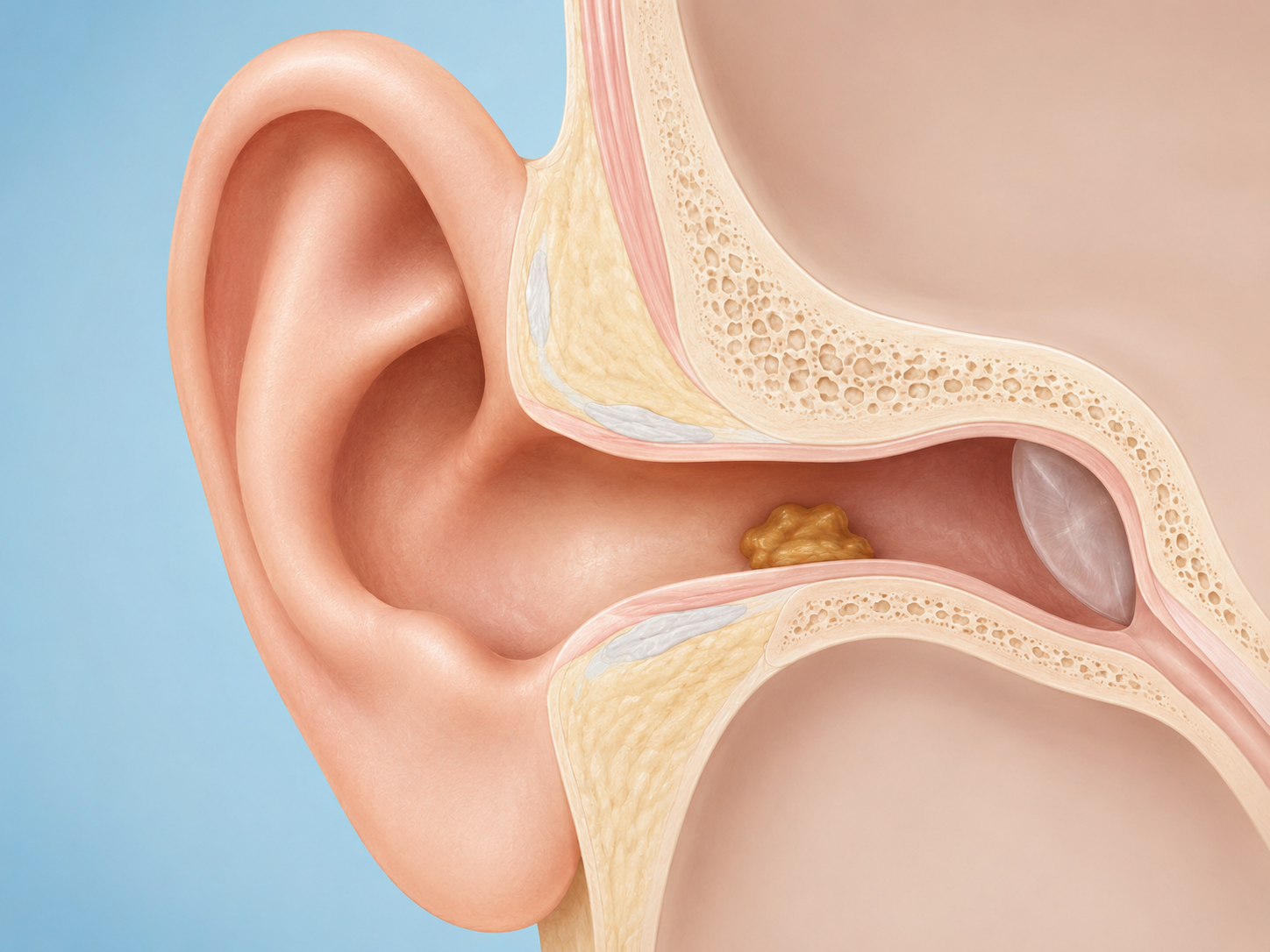
- Muffled hearing
- A blocked or full feeling in the ear
- Earache
- Itching
- Dizziness or vertigo
- Ringing or buzzing in the ear
- Tinnitus that feels more noticeable on one side
For some people, the wax itself may irritate the ear canal. For others, the bigger issue is that blocked hearing makes internal sounds more noticeable.
That is why earwax-related tinnitus often comes with a sense of pressure, fullness, dull hearing, or “my ear needs to pop.”
Why can blocked earwax make tinnitus louder?
Tinnitus is the perception of sound when there is no matching external sound source. It can be heard as ringing, buzzing, hissing, humming, roaring, whooshing, or high-pitched tones.
When earwax blocks the ear canal, two things can happen.
First, outside sound may become quieter or muffled. When the brain receives less normal environmental sound, tinnitus can feel more obvious by contrast. A quiet room can make tinnitus more noticeable for the same reason.
Second, a wax blockage can create a sensation of pressure or fullness in the ear. That blocked sensation can make you focus on the ear more, which can increase the emotional urgency of the tinnitus.
This does not mean the wax has damaged your hearing permanently. In many cases, wax-related symptoms improve once the blockage is safely softened or removed.
But it does mean that if your tinnitus appeared alongside blocked hearing, ear fullness, or muffled sound, earwax is worth considering as one possible factor.
Can tinnitus go away after earwax removal?
Sometimes, yes.
If earwax build-up is the main reason your tinnitus has appeared or become louder, then softening or removing the wax may reduce the tinnitus. Some people notice a big improvement once the ear canal is clear again.

This is why you may see stories online where someone says their tinnitus “vanished” after ear drops, microsuction, or wax removal.
Those stories can be genuine.
But they can also be misleading if taken as general advice.
If someone’s tinnitus was caused mainly by a wax blockage, removing that blockage may help a lot. If someone’s tinnitus is linked with noise exposure, age-related hearing changes, jaw tension, stress, medication, ear infection, or another underlying factor, wax removal may do little or nothing.
So the safest way to phrase it is this:
Wax removal can reduce tinnitus symptoms when wax build-up is contributing to the problem. It should not be seen as a guaranteed cure for tinnitus.
Symptoms that suggest earwax may be involved
Earwax may be worth investigating if your tinnitus comes with one or more of these symptoms:
- Your ear feels blocked or full
- Your hearing sounds muffled
- One ear feels worse than the other
- You have ringing or buzzing in the blocked ear
- Your ear feels itchy
- You have mild earache or irritation
- Your tinnitus started after using cotton buds, earplugs, earbuds, or hearing aids
- Your hearing improves briefly when you move your jaw, pull your ear, or after a shower
- You have a history of wax build-up
- Your tinnitus feels more like pressure, dullness, or internal echo than a clean tone
None of these symptoms proves that earwax is the cause. But they are clues that a blocked ear may be part of the picture.
What does wax-related tinnitus sound like?
There is no single “earwax tinnitus sound.”
People describe it in different ways, including:
- Ringing
- Buzzing
- Humming
- Dull roaring
- Muffled internal noise
- A blocked “underwater” sound
- High-pitched tone
- Low rumble
- Pressure-like sound
The sound itself does not prove the cause.
A high-pitched tone can happen with hearing loss, noise exposure, stress, earwax, or other factors. A low hum can also have several possible causes.
The more useful question is not only “what does it sound like?” but:
“What else changed at the same time?”
If the tinnitus appeared alongside blocked hearing, wax build-up becomes more plausible. If it appeared after loud noise exposure, illness, stress, medication changes, jaw tension, or sudden hearing loss, other causes may need to be considered.
Can ear cleaning help tinnitus?
Ear cleaning can help tinnitus if the tinnitus is being caused or worsened by wax build-up.
But “ear cleaning” needs to be understood carefully.
Safe earwax management usually means softening wax with suitable drops or having wax removed by a trained professional. It does not mean digging into the ear with cotton buds, hair grips, ear candles, or other objects.
Trying to clean inside your own ear canal can push wax deeper, irritate the skin, or even damage the eardrum. In some cases, aggressive cleaning can make symptoms worse.
This is why many healthcare sources advise against putting objects into the ear canal.
Your ear is not like a drainpipe that needs scraping clean. It is sensitive tissue, and it usually has its own cleaning system.
Should you use ear drops for tinnitus?
Ear drops may help if your tinnitus is related to earwax build-up.
Many pharmacies sell drops designed to soften wax. These may include olive oil, sodium bicarbonate, hydrogen peroxide-based drops, or other wax-softening products depending on the country.
However, ear drops are not suitable for everyone.
You should be careful and seek professional advice first if you have:
- Ear pain
- Fluid, blood, or discharge from the ear
- A suspected ear infection
- A perforated eardrum or history of eardrum problems
- Grommets or ear tubes
- Recent ear surgery
- Severe dizziness or vertigo
- Sudden hearing loss
- A skin condition affecting the ear canal
- Previous bad reactions to ear drops
Also, ear drops can sometimes make the ear feel more blocked at first. This can happen because the wax softens and expands before it clears. That temporary blocked feeling can be unsettling if you already have tinnitus.
If your symptoms worsen, persist, or feel unusual, it is better to stop guessing and get checked.
Can earwax removal make tinnitus worse?
In most cases, safe wax removal is intended to improve symptoms caused by blockage. But some people do report temporary irritation, sensitivity, or tinnitus changes after wax removal.
Possible reasons include:
- The ear canal was already irritated
- The wax was very hard or impacted
- The procedure caused temporary sensitivity
- The ear was exposed to more sound after being blocked
- The person became more focused on the tinnitus
- There was another underlying issue, not just wax
This does not mean wax removal is bad. It means the method matters.
Professional removal, done carefully by someone trained, is very different from aggressive home syringing or poking around with objects.
If you are anxious about tinnitus, tell the clinician before the procedure. Ask what method they use, what to expect, and what warning signs to look out for afterwards.
What not to do if you suspect earwax tinnitus
If you think earwax may be affecting your tinnitus, avoid these common mistakes.
Do not use cotton buds inside the ear canal
Cotton buds can push wax deeper. They can also irritate the ear canal or damage the eardrum.
Cleaning the outer ear is fine. Digging into the canal is where problems can start.
Do not use ear candles
Ear candles are not a safe or reliable way to remove wax. They can cause burns, irritation, or further blockage.
Do not aggressively flush your own ears
Home irrigation can be risky if done too forcefully or when the ear is not suitable for it. If you have pain, discharge, infection, a perforated eardrum, or previous ear surgery, irrigation may be unsafe.
Do not assume wax is the only cause
Wax can be one piece of the puzzle. But tinnitus can also be linked with hearing loss, noise exposure, stress, jaw issues, neck tension, ear infections, medication, blood pressure changes, or other causes.
Do not panic if ear drops do not fix it
If drops do not reduce the tinnitus, it does not mean you are stuck. It simply means wax may not be the main driver.
Tinnitus management is often about reducing distress, improving sleep, adding supportive sound, calming the nervous system, and learning what makes the sound feel less threatening.
Why Reddit stories about ear drops can be confusing
Online tinnitus forums are full of dramatic stories.
One person says ear drops made their tinnitus disappear. Another says ear cleaning made theirs worse. Someone else recommends a product they bought abroad. Another person says nothing helped.
The problem is that all of these stories may be honest, but they are not all describing the same condition.
Tinnitus is a symptom, not one single disease. Two people can both say “I have tinnitus” while having completely different underlying reasons for it.
One person may have a wax blockage.
Another may have noise-induced hearing changes.
Another may have jaw tension.
Another may have anxiety-driven sound sensitivity.
Another may have an ear infection.
Another may have age-related hearing loss.
So when someone says, “These drops cured my tinnitus,” the more accurate interpretation may be:
“These drops helped my tinnitus because wax build-up was contributing to it.”
That is useful information. It is not universal advice.
When should you get checked?
You should consider getting your ear checked if your tinnitus is new, one-sided, worsening, or linked with blocked hearing.
You should seek medical advice more urgently if you have:

- Sudden hearing loss
- Tinnitus in one ear only, especially if new
- Pulsatile tinnitus that beats with your pulse
- Severe dizziness or vertigo
- Ear pain
- Fluid, pus, or blood from the ear
- Symptoms after a head injury
- A suspected ear infection
- Facial weakness or numbness
- A history of ear surgery or perforated eardrum
These symptoms do not always mean something serious is happening, but they are not symptoms to manage with random ear drops from the internet.
What if wax is not the cause?
If your ears are clear but the tinnitus remains, that can feel frustrating. But it is also common.
Tinnitus can continue even when there is no wax blockage, no visible ear problem, and no simple “thing to remove.”
That does not mean nothing can be done.
Many people improve their relationship with tinnitus by working on:
- Sound enrichment
- Sleep support
- Stress reduction
- Nervous system calming
- Gentle masking
- Habituation
- Reducing silence
- Understanding personal triggers
- Lowering the emotional threat response
The goal is not always to force the sound to disappear. Often, the first realistic goal is to make it feel less urgent, less intrusive, and less emotionally exhausting.
That is where practical tinnitus support can help.
Final thoughts
Earwax can cause or worsen tinnitus in some people, especially when it creates blocked hearing, pressure, fullness, or irritation.
If wax is the main issue, softening or removing it safely may reduce the ringing or buzzing. In some cases, the improvement can be dramatic.
But earwax is not the cause of all tinnitus. Ear drops are not a universal cure. And trying to clean your ears aggressively can create new problems.
The sensible approach is simple:
If your tinnitus comes with blocked hearing, fullness, or wax symptoms, consider getting your ears checked. If wax is present, deal with it safely. If your ears are clear and the tinnitus remains, shift the focus toward calming the system, supporting sleep, using sound wisely, and reducing the distress around the noise.
Tinnitus is easier to manage when you stop chasing every miracle story and start working through the likely causes and supports one step at a time.
What if wax is not the cause? – Join The Tinnitus Project for tools to help mask and notch your tinnitus to provide relief.
FAQ
Can earwax cause tinnitus?
Yes, earwax build-up can sometimes cause or worsen tinnitus. This is more likely when the wax creates blocked hearing, fullness, pressure, or irritation in the ear.
Can tinnitus go away after earwax removal?
Sometimes. If wax build-up is the main trigger or amplifier, tinnitus may reduce or even go away after the wax is safely softened or removed. But wax removal is not a guaranteed tinnitus cure.
What are the symptoms of earwax-related tinnitus?
Possible symptoms include ringing or buzzing, muffled hearing, a blocked or full feeling in the ear, earache, itching, dizziness, and tinnitus that feels worse in one ear.
Can ear drops help tinnitus?
Ear drops may help if the tinnitus is related to wax build-up. They work by softening wax so it can clear more easily. However, drops are not suitable for everyone, especially if there is pain, discharge, infection, a perforated eardrum, or previous ear surgery.
Can ear cleaning make tinnitus worse?
It can, especially if the ear is cleaned aggressively or with unsafe methods. Cotton buds, ear candles, and forceful home flushing can irritate the ear or push wax deeper. Professional wax removal is usually safer than trying to dig wax out yourself.
What does earwax tinnitus sound like?
Wax-related tinnitus can sound like ringing, buzzing, humming, roaring, or a muffled internal noise. The sound alone does not prove that wax is the cause.
Should I use cotton buds to remove earwax?
No. Cotton buds can push wax deeper into the ear canal and may irritate or damage the ear. They should only be used for cleaning the outer ear.
When should I see a doctor about tinnitus and earwax?
Get checked if your tinnitus is new, one-sided, worsening, or comes with blocked hearing. Seek medical advice urgently if you have sudden hearing loss, severe dizziness, ear pain, discharge, bleeding, pulsatile tinnitus, or symptoms after an injury.